IRC SP 88 and SP 57: What the Road Safety Audit Standard Says, and Where Bengaluru Is Failing
Introduction
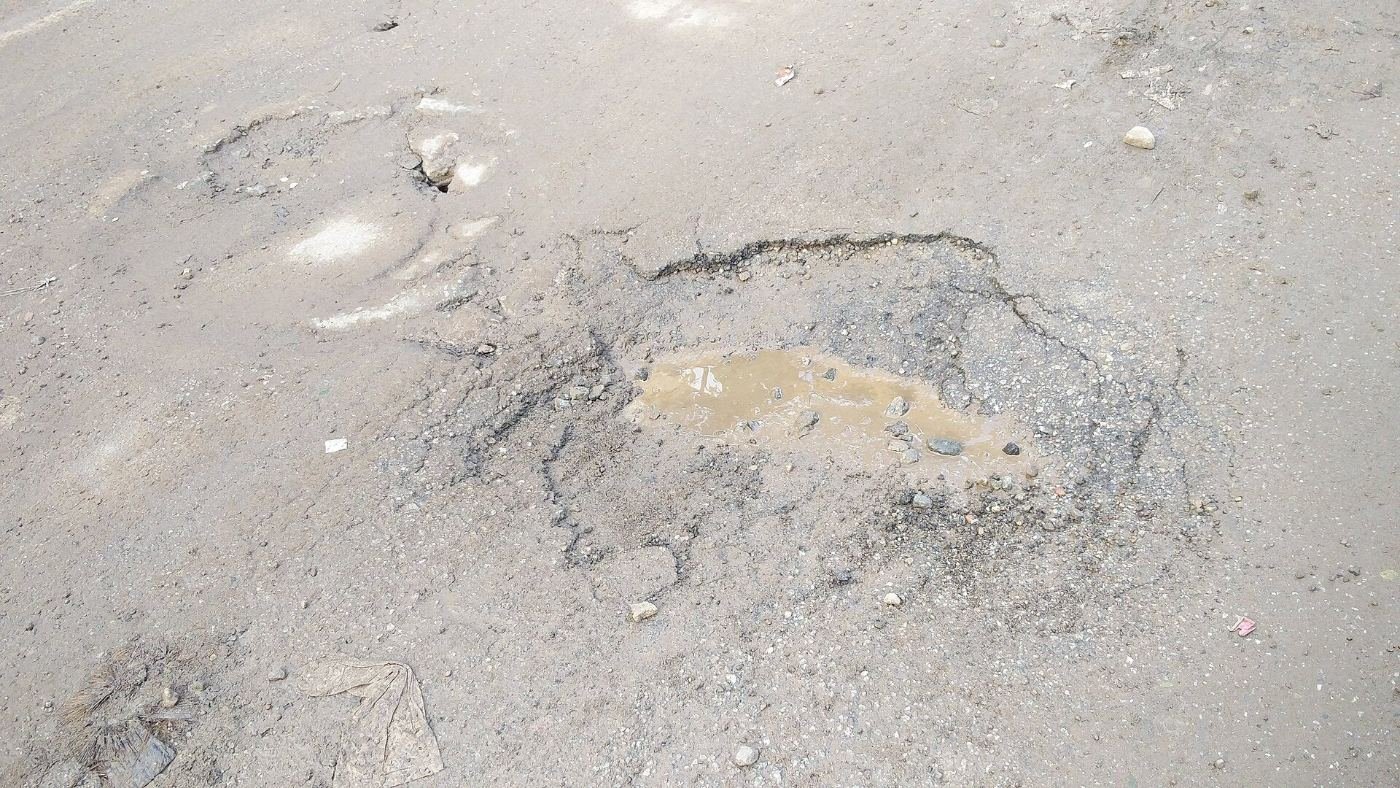
Every year thousands of people die on Indian roads. Bengaluru has topped the NCRB chart for deaths due to civic negligence for four years in a row. We spend thousands of crores on building and repairing roads, and within one monsoon the same roads are full of potholes, broken edges and dangerous patches.
The question is simple: are we building roads the right way? And more importantly, is anyone checking?
The Indian Roads Congress (IRC) has already answered the first question. Two of its publications tell us exactly how to check a road: IRC SP 88, the Manual on Road Safety Audit, and IRC SP 57, the Guidelines for Quality Systems for Road Construction. These are not new or secret documents. They are the rulebook.
But when Infra Kaizen studied 30 roads in Bengaluru, not even 10% of IRC conditions were followed. The brand-new SM Krishna Road (Mysore Road to Magadi Road, also called the Bengaluru Business Corridor) shows the same defects as a 20-year-old road.
This blog explains what the two standards actually say, at what level we are implementing them today, what the practical challenges are, how a quality engineer can make sure the points are checked, and how the Greater Bengaluru Authority (GBA) and Karnataka can use these standards to make roads better.
What is a Road Safety Audit? IRC SP 88 explained
IRC SP 88 was first published in 2010 and revised in 2019. A Road Safety Audit (RSA) is a formal check of a road, done by independent experts, to find anything that could cause a crash for any road user: car drivers, two-wheeler riders, bus passengers, cyclists and people walking.
The most important idea in the manual is this: an RSA is not a compliance check. A road can meet every line of the design standard on paper and still be dangerous in real life. The audit looks at the road from the user's seat. Will a driver see this curve sign at night? Can a child cross here? Will a truck coming off the flyover understand that the lane ends?
The five stages of the audit
IRC SP 88 asks for the audit at five stages, so that a problem is caught when it is still cheap to fix.
| Stage | What is checked |
|---|---|
| 1. Feasibility / preliminary design | Route choice, design speed, alignment, where the junctions will be. A mistake caught here costs almost nothing. A mistake missed here becomes a permanent defect. |
| 2. Detailed design | Lane widths, curve radius, gradients, sight distance, junction geometry, road markings, signals, lighting, footpaths, pedestrian crossings, bus bays (at least about 75 m away from a junction). |
| 3. Construction | Traffic diversion and barricading during work, worker safety, whether pedestrians still have a safe path, and whether what is being built matches the drawing. |
| 4. Pre-opening | A day inspection and a night inspection before traffic is allowed. Signs, markings, median openings, lighting, drainage and visibility are checked as a user would see them. |
| 5. Existing roads | Roads already in use are audited using crash data and field observation to find missing safety features and maintenance needs. |
Who does the audit, and how
The manual is strict about independence. The audit team must have at least two people: a senior Road Safety Auditor as team leader, and a qualified engineer. Nobody on the team should have been involved in planning, designing or building that road. The same agency cannot audit its own work.
The process has ten steps: decide if an audit is needed, appoint the team, hand over drawings and reports, hold a start meeting, do a desk review of the drawings, inspect the site by day and by night, write the report with a risk rating for each concern, hold a closing meeting, get a written response from the road authority on every recommendation (accept, accept with a different fix, or reject with reasons), and finally implement the agreed changes.
The written response is the key. The road authority is not forced to accept every recommendation. But it has to answer each one in writing and give a reason if it rejects it. That one rule creates accountability.
What is a quality system? IRC SP 57 explained
If SP 88 checks whether the road is safe, SP 57 checks whether the road is built well. IRC SP 57 (2000) brings the ISO 9000 way of thinking into road work. It defines quality simply: the road should have all the features that satisfy the stated requirement, every time, and there should be a record to prove it.
The standard puts every road into one of four Quality Assurance classes, so that a bigger road gets a tighter check:
- Q-1 (Nominal): village roads.
- Q-2 (Normal): other district roads and major district roads.
- Q-3 (High): state highways, national highways, and any road in a high-rainfall area (over 2000 mm a year) or at high altitude.
- Q-4 (Extra High): expressways, elevated roads, roads in tunnels and underpasses, roads on reclaimed land.
For each class, the standard lists what must be controlled: materials (aggregate, bitumen, concrete, steel), the method, the equipment, the workmanship, and the records. It asks for a written Quality Assurance Plan for every project, full-time supervision, periodic independent audit, and standard forms for material testing, inspection and non-conforming work.
A note for readers: IRC SP 57 has since been replaced by IRC SP 112 (2017), the Manual for Quality Control in Road and Bridge Works. The thinking is the same; SP 112 adds updated test frequencies and acceptance limits. In this blog we refer to SP 57 because that is what most engineers still know by name, and the principles have not changed.
Most arterial and sub-arterial roads in Bengaluru carry highway-level traffic and sit in a city that receives close to 1000 mm of rain. By the logic of SP 57 they should be treated as Q-3. On the ground, many of them do not even get Q-1 level control.
At what level are we implementing today?
Let us be honest about where we stand. This is our assessment after studying 30 roads and 70 signals in Bengaluru.
| What the standard asks | What happens in Bengaluru today |
|---|---|
| Stage 1 and 2 audit of the design | Not done for city roads. Designs are cleared on alignment, width and cost. Nobody scores the design against IRC. |
| Stage 3 audit during construction | Not done. Barricading and pedestrian diversion are left to the contractor. |
| Stage 4 pre-opening audit, day and night | Not done. A road is "opened" when the work is physically complete, often by a political event. |
| Stage 5 audit of existing roads | Only on some National Highway stretches under MoRTH. Almost never on GBA or PWD city roads. |
| Independent auditor | The agency that builds the road inspects and certifies its own road. |
| Quality Assurance Plan, test records, core samples | Reports say BBMP has no quality control report on roads, and none of the 27 bitumen mix plants used by its contractors were inspected. Core sample records are not published. |
| Written response to every audit recommendation | There are no audit recommendations to respond to. |
In short: we are at Stage 0 for city roads. The standard exists; the implementation has not started.
The problem for the citizen
An AI-based survey of 2,493 km of roads under Bengaluru North City Corporation found 14,393 potholes. That is nearly six potholes in every kilometre. Byatarayanapura alone had 5,964. Many of these are on roads that were built or resurfaced in the last three years.
For the person on the road this means a two-wheeler rider swerving at night to avoid a hole she could not see, a bus that cannot stop at the bus stop because the bay is at the junction, a pedestrian walking on the carriageway because the footpath is dug up, and a brand-new corridor like SM Krishna Road where the edge line disappears exactly where the road narrows.
And the money is real. Reports put Bengaluru's road spending at around Rs 5,500 crore over three years, with a separate Rs 750 crore grant just for pothole filling. We are paying for highway-quality roads and getting village-road quality.
Practical challenges: why the audit is not happening
It is easy to say "do the audit". Here are the real obstacles we see, and we should solve each one separately rather than treating it as one big problem.
- No trained auditors. IRC SP 88 needs a senior Road Safety Auditor to lead the team. Karnataka has only a handful of certified auditors, and almost none inside GBA or the city PWD divisions.
- No budget line. The audit is not in the project estimate, so it is not in the tender, so it is not done. An RSA costs a tiny fraction of the project, but if it is not a line item, it does not exist.
- Time pressure. Roads are built to an inauguration date, not to a quality date. A day-and-night pre-opening inspection that finds 30 defects is seen as a delay, not as a saving.
- No independence. The executing engineer, the inspecting engineer and the certifying engineer are the same person or the same office.
- Utility cuts after the road is finished. BWSSB, BESCOM, telecom and private builders dig the new road within weeks. Even a perfectly audited road is destroyed from below.
- Records are not kept, so nothing can be audited later. Without a Road History Register and test records, a Stage 5 audit has nothing to compare against.
Root cause
When we go one level deeper, the six challenges above come from three root causes.
Root cause 1: Design failure is not visible to anyone. There is no score, no checklist and no sign-off against IRC at the design stage. So a bad design and a good design look the same on the approval file. This is why signals run anticlockwise on more than 30% of the junctions we surveyed, and why footpaths end at a tree.
Root cause 2: The builder is also the checker. Every quality rule in SP 57 and every audit rule in SP 88 depends on an independent person looking at the work. We do not have that person in the system. As one urban planner put it, we have an executing agency whose work is not subject to any standard or regulation.
Root cause 3: Nobody is answerable after the ribbon is cut. The three-year contractor maintenance clause is enforced only on a few major roads. Final payment is released before the maintenance period ends. There is no penalty for a utility agency that cuts a new road. So there is no reason for anyone to do it right.
How a Quality Engineer can make sure the points are checked
This is the practical heart of the blog. A Quality Engineer on a GBA or PWD road project does not need to invent anything. IRC SP 57 / SP 112 already list the tests. The engineer's job is to turn them into hold points: fixed moments where work stops until the check is done and recorded. Here is the minimum.
Before construction (Stage 1 and 2 audit). Score the design against an IRC checklist: lane width, curve radius, sight distance, junction type, pedestrian crossing at every junction and bus stop, bus bay at least about 75 m from the junction, drainage on both sides, lighting. If the score is below 80%, the design goes back. Keep the scored checklist in the file.
Subgrade and base. Witness the compaction test on every layer. Check that the camber and drainage are right before the next layer is allowed. No layer is covered without a signed test.
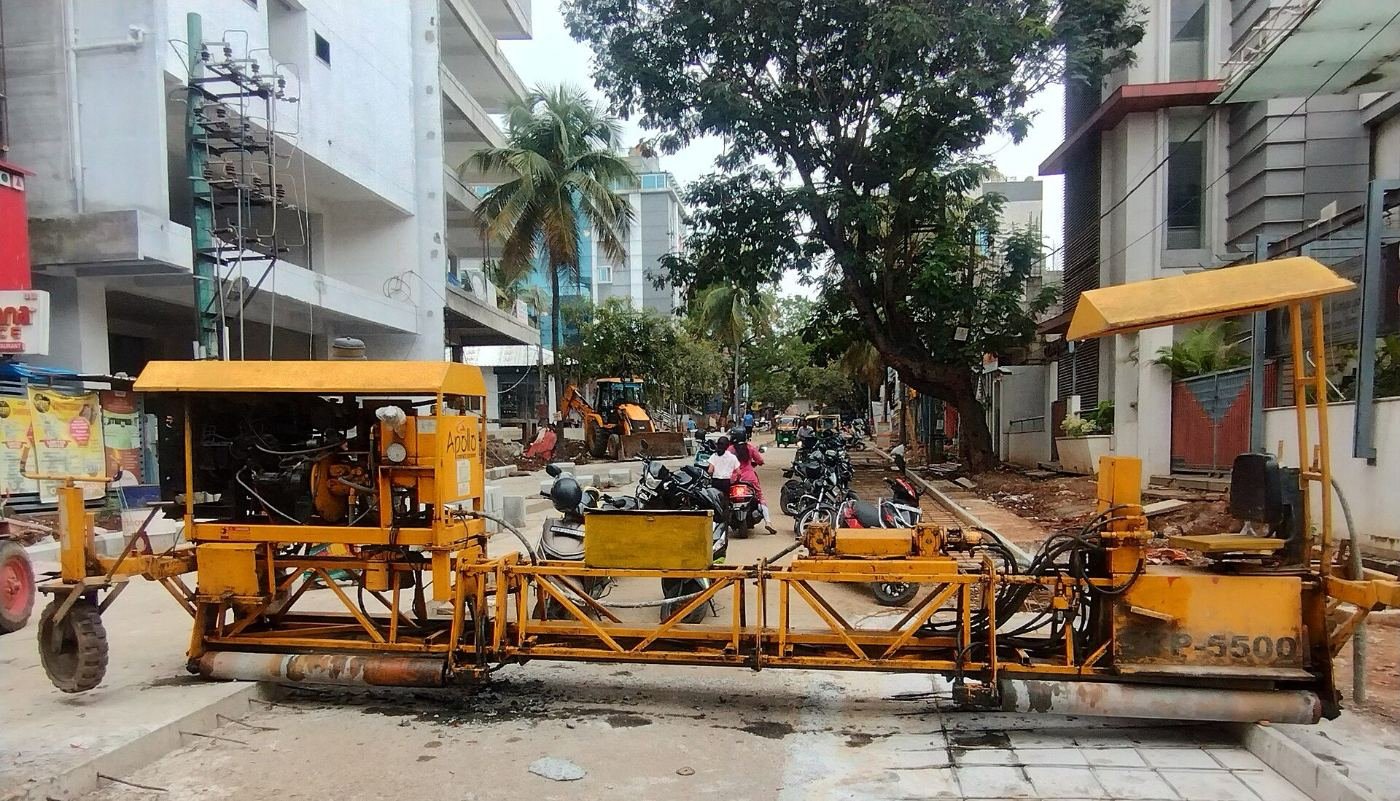
At the hot-mix plant. Visit the plant. Check the bitumen grade against the invoice (kerosene and soft gravel substitutions happen here), check aggregate grading, and record the mix temperature at discharge. Do this for every plant that supplies the project, not once a year.
At laying. Prime coat and tack coat applied and allowed to break. Mix temperature at the paver. Mechanical paver only, at the designed thickness. Three-stage rolling: breakdown, intermediate, finish. Record the time between laying and opening to traffic.
After laying. Core samples at 10 m on straight stretches and 5 m on curves, as the 2009 Shivashankara Rao committee recommended for Bengaluru. Check thickness, density and binder content. Check evenness. Publish the results on the Road History Register.
Before opening (Stage 4 audit). Walk the road by day and drive it by night with the independent audit team. Every sign, every marking, every median opening, every streetlight. Write the report. Get the written response. Only then open.
Bill passing. No running bill is passed without the test results for that section attached. The final bill is held until the three-year maintenance period ends.
Where GBA is failing, and how to correct it
The Greater Bengaluru Authority and its five city corporations inherited BBMP's roads and BBMP's habits. Here is what is failing and the correction for each, following the Plan, Do, Check, Act cycle.
| Where GBA is failing | Correction |
|---|---|
| No Road Safety Audit on any city road | Plan: Make IRC SP 88 audit compulsory in the tender for every arterial and sub-arterial road above Rs 5 crore, at Stages 1, 2 and 4. Put it as a line item in the estimate so it gets funded. |
| No independent auditor | Plan: Create an independent Road Quality and Safety Cell for Bengaluru, outside the executing engineering wing, staffed by IRC-trained auditors, with power to stop a bill. |
| Engineers not trained on IRC codes | Do: Compulsory training on IRC SP 88, SP 57/112, IRC 86 (urban geometric design) and IRC 35 (markings) for every engineer who designs or approves a road. Refresher every three years. No training, no signing power. |
| Bitumen plants and sites not inspected | Do: Quality Engineer hold points as listed above, with plant visits recorded by geotagged photo and time stamp. |
| No Road History Register, data behind a login | Check: A public online register for every road: date built, contractor, materials, test results, every utility cut, every repair. Bills and contract renewals are linked to it. |
| Utility agencies cut fresh roads | Check: All utility agencies submit a five-year plan for a stretch before it is resurfaced; underground work is finished first. Any cut afterwards is restored to IRC standard by the cutting agency, verified by the independent cell, with a penalty. |
| Three-year maintenance clause not enforced | Act: Extend the clause to all roads, hold final payment until it ends, and publish the list of contractors with pothole complaints in the maintenance period. |
| Roads laid in the monsoon for an inauguration date | Act: A simple rule: no bitumen laying between June and September unless the independent cell approves in writing. The inauguration moves; the road does not fail. |
What citizens should expect, and when
We are not asking for all of Bengaluru's roads to be fixed tomorrow morning. That is not realistic and anyone who promises it is not serious. What we are asking is for a steady, measurable improvement over 10 to 15 years, with a public number to track.
Our demand is simple. The government asks a common man building a house for 100% compliance: a sanctioned plan, a structural certificate, an occupancy certificate. It does not follow even 10% of its own rules when it builds a road used by lakhs of people. If a house needs a completion certificate, a road should need a safety and quality certificate from an independent auditor before it is opened. That is all IRC SP 88 and SP 57 are asking for.
If you are a quality engineer, a contractor, a corporator or an officer in GBA, PWD or KRDCL, the two standards are available from the Indian Roads Congress. Read them. Put the hold points in your next tender. Ask for the audit report before you cut the ribbon. The rulebook already exists; the only thing missing is the habit of using it.
References: IRC SP 88 (2019), Manual on Road Safety Audit; IRC SP 57 (2000), Guidelines for Quality Systems for Road Construction, superseded by IRC SP 112 (2017); Report of the K N Shivashankara Rao committee on Bengaluru roads (2009); Bengaluru North City Corporation AI road survey (2026); reports in Deccan Herald, The Week and Citizen Matters on Bengaluru road quality (2022 to 2026).